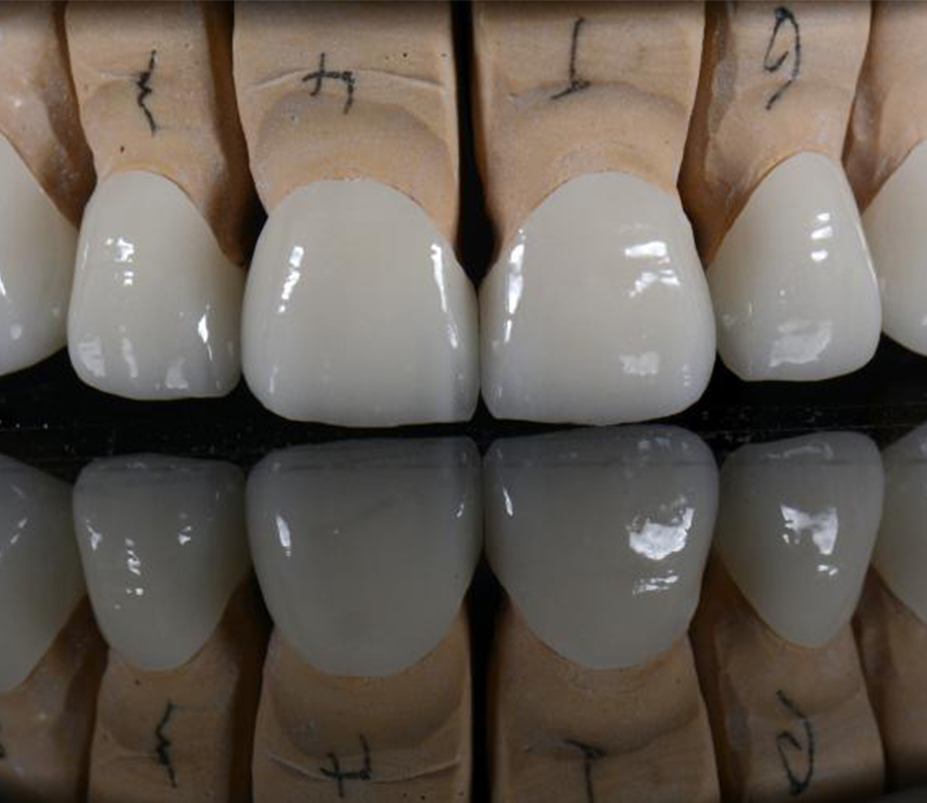
An Emax crown is a lithium-disilicate restoration designed for clinics that need high aesthetics without sacrificing clinical versatility. In anterior and premolar cases, lithium disilicate offers a balance of lifelike translucency, shade integration, and durable function. Because it is metal-free, Emax crowns avoid the dark gingival line that can appear with PFM restorations, and its glazed surface resists staining better than many esthetic alternatives. For dental practices in 30+ countries, Emax crowns are a predictable option for single-unit anterior and premolar cases when the clinical situation supports that choice.
Our laboratory, founded in 2012 in Shenzhen, China, is a full-service CAD/CAM dental laboratory. We fabricate custom restorations for dental clinics in 30+ countries, including Emax crowns and veneers, zirconia, PFM, inlays/onlays, dentures, implant restorations, retainers, and night guards. This page focuses on Emax crowns and how clinics can integrate them into everyday esthetic and restorative workflows.
Key Advantages of Emax Crowns
Lifelike color matching and translucency. Lithium disilicate can be designed and characterized to blend with adjacent enamel and dentin. This is especially valuable in the anterior region, where value, chroma, and translucency must read naturally under different lighting. A well-made Emax crown can mimic the optical depth of natural teeth while maintaining a consistent shade across the restoration.
Strength suitable for anterior and premolar cases. Emax crowns provide reliable strength for anterior and premolar restorations when used according to accepted clinical protocols. With adhesive bonding, dentists can often achieve predictable retention and fracture resistance in suitable cases. This makes lithium disilicate a practical material for esthetic zones without automatically moving to a less translucent ceramic.
Biocompatibility and smooth surface. Lithium disilicate is metal-free and well tolerated by oral tissues. The smooth, glazed surface supports plaque resistance and a favorable soft-tissue response, which matters for gingival health and long-term maintenance. Clinics often appreciate the clean margins and polishability that come with a properly finished Emax restoration.
Minimally invasive prep preserving tooth structure. Compared with some full-coverage options, Emax crowns and veneers can allow more conservative preparation when the case permits. Preserving enamel and tooth structure supports adhesive protocols and can reduce the need for aggressive reduction. For dentists, this means the material can fit into minimally invasive treatment plans without compromising esthetics.
Ideal Clinical Applications for Emax Crowns
Front-teeth aesthetics. Emax crowns are commonly selected for maxillary and mandibular anterior teeth where translucency, shade matching, and surface texture are critical. They can restore single anterior units, complement veneer cases, or correct shape and shade issues in the esthetic zone.
Post-endodontic restoration. After endodontic treatment, an Emax crown can restore function and protect remaining tooth structure when the clinical requirements are met. The material’s optical properties help avoid a gray or opaque appearance, which is especially noticeable in anterior teeth.
Cosmetic enhancement for minor irregularities. For dentists managing small positional, shape, or shade discrepancies, Emax crowns and veneers can provide a controlled esthetic outcome. They are useful when direct bonding may not deliver the desired longevity or surface characteristics.
Replacement of large failing fillings. When a tooth has a large failing composite or amalgam restoration and cuspal coverage is indicated, an Emax crown can restore the tooth with a durable, tooth-colored material. The restoration can be designed to support remaining structure while improving esthetics.
CAD/CAM Digital Fabrication Workflow
Our Emax crown workflow is built around digital accuracy and craftsmanship. Cases are designed in Exocad or 3Shape, using the scan and clinical information provided by the dental clinic. The design is then fabricated with CAD/CAM and 5-axis milling, followed by manual quality inspection and finishing. We also use 3D printing in the digital workflow where it supports model work, verification, or related laboratory processes.
For Emax restorations, the digital design phase allows us to control anatomy, contacts, occlusion, and emergence profiles before manufacturing. After milling, the restoration is characterized and finished to support the requested shade and translucency. Manual inspection helps confirm margins, fit, and surface quality before the case is returned to your clinic. The result is a restoration designed to seat efficiently and blend with the patient’s natural dentition.
Partnering with Our Dental Laboratory
We support dental clinics with case planning, material selection, digital design, fabrication, and technical support from planning through seating. Our regular Emax crown cases take about 3 days of lab time. Implant and complex cases typically require 4+ days. Total turnaround, including shipping, is about 7 days. Certificates are available upon request.
If your clinic is evaluating a new laboratory partner for Emax crowns, we can discuss your preferred protocols, shade documentation, and shipping needs. Contact us at [email protected] or WhatsApp +86 18925410015 to start a case or request more information.