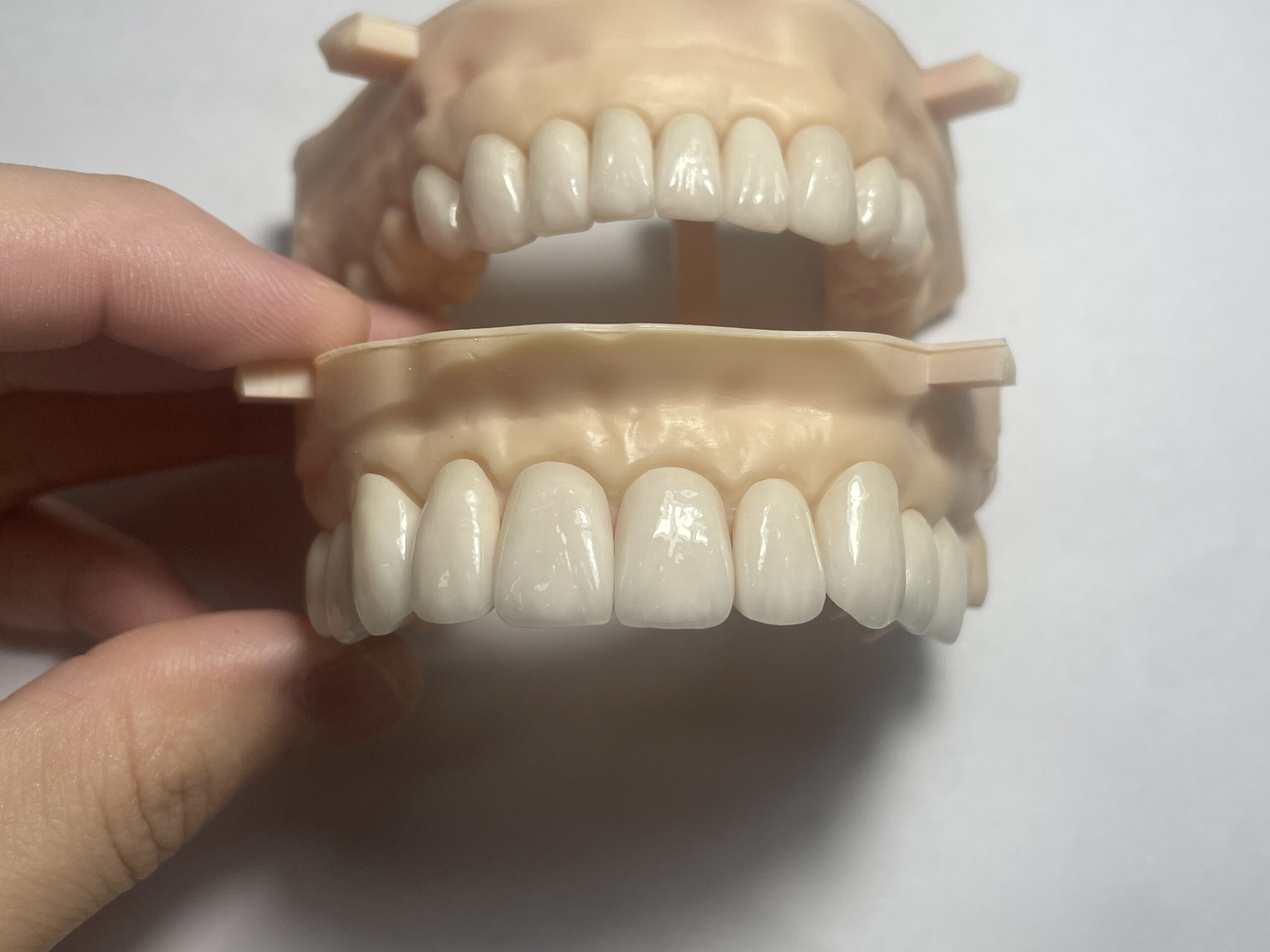
Dentists and clinic owners evaluate a China dental lab for one practical reason: they need dependable custom restorations delivered at a predictable cost, without adding risk to their clinical schedule. In many markets, the cost of producing crowns, bridges, veneers, dentures, and implant restorations is shaped by high operational overhead, limited CAD/CAM capacity, and pressure on skilled technicians. A China-based dental laboratory can offer a different structure: centralized digital design, industrial CAD/CAM production, 5-axis milling, 3D printing, and a full-service material range. For clinics, the goal is not simply a lower price. It is a partner that can absorb case volume, maintain consistency, communicate in English, and return restorations that seat with minimal chairside adjustment.
This guide covers what to evaluate when selecting a China dental lab, how cases typically flow, and how a good partner reduces the risks of offshore outsourcing.
Why Clinics Outsource Lab Work to China
Outsourcing to China is most compelling when a clinic wants to expand restorative capacity without expanding its in-house lab. A full-service China dental lab can fabricate PFM crowns and bridges, full-contour and layered zirconia crowns, lithium-disilicate crowns and veneers, ceramic and composite inlays and onlays, removable dentures, implant restorations, retainers, and night guards. That range means a clinic can consolidate multiple case types with one partner rather than managing several specialized labs.
The economics come from more than labor. Digital dentistry changes the production model. Cases designed in Exocad or 3Shape can move into CAD/CAM workflows, 5-axis milling, and 3D printing with fewer manual steps and more repeatable output. A laboratory built around this workflow can process routine and complex cases systematically, which helps clinics predict turnaround and cost. The value is strongest when the clinic already scans digitally or can ship impressions safely, because the digital or physical master cast becomes the starting point for a controlled production process.
What to Evaluate in a China Dental Lab
Before sending cases, evaluate the laboratory as a production partner, not just a price list.
Digital workflow
Ask which design software and production equipment are used. Exocad and 3Shape are common in digital dental labs, and familiarity with both can help when a clinic has established design preferences or needs to exchange files. CAD/CAM, 5-axis milling, and 3D printing should be part of the standard workflow, not a marketing line. For implant cases, confirm how the lab handles scan bodies, models, and restorative components. For removable cases, ask how digital design and printing support denture bases, frameworks, and try-in stages.
Quality control at every stage
Quality control should not happen only at final inspection. A strong China dental lab checks the scan or impression upon receipt, verifies margins and occlusion during design, controls milling or printing parameters, and inspects fit, contacts, shade, and surface finish before shipping. For implant and full-arch cases, the QC process should include verification of the restorative interface and the planned insertion path. Ask what happens when a case fails an internal check: is it remade before shipping, and how is the clinic notified?
Communication and case tracking
Offshore outsourcing depends on clear communication. Look for English-speaking technical support that can discuss preparation, material selection, implant platforms, shade matching, and design changes. A case-tracking system or structured email updates help clinics know when a case is received, designed, produced, and shipped. Time-zone differences are manageable when the laboratory provides a single point of contact and responds within a defined business window.
Turnaround
Turnaround should be stated in concrete terms. For regular cases, a typical lab time is about 3 days. Implant and complex cases usually require 4 or more days. Including shipping, total turnaround is often about 7 days. Clinics should confirm cut-off times, shipping method, customs documentation, and whether rush options are available. A lab that gives only vague turnaround promises is harder to schedule around.
Materials and certification transparency
Ask for the material brands or categories used for zirconia, lithium disilicate, ceramics, composites, denture materials, and implant components. For lithium-disilicate restorations, Emax is a well-known material technology; describe the indication and aesthetic goal rather than assuming a single specification fits every case. Certification documentation should be available upon request, but clinics should still verify that the documents match the materials used for their cases.
How Cases Flow with a China Dental Lab
A typical case begins with digital impressions/scans or shipped impressions. If the clinic scans, the lab receives STL or PLY files and case photos. If the clinic ships impressions, the lab pours models or scans the impression according to the material and case type. The lab then plans the case: margin marking, design in Exocad or 3Shape, material selection, and production routing.
Fabrication follows the case type. Crowns and bridges may be milled in zirconia, lithium disilicate, or PFM framework, then finished and layered where needed. Inlays, onlays, veneers, and implant restorations follow their own design and processing protocols. Removable dentures may involve acrylic, flexible material, metal framework, or titanium components. Retainers and night guards are produced from approved digital files or models. After fabrication, the case goes through QC for fit, occlusion, contacts, shade, and finish. It is then packed, tracked, and shipped to the clinic.
Risks and How a Good Partner Mitigates Them
The main risks in offshore dental lab work are fit issues, remakes, communication gaps, and shipping delays. A good China dental lab mitigates these risks with disciplined intake, design review, and pre-shipment QC. If a restoration does not fit or meet the approved design, the remake policy should be clear: what is covered, what information is required, and how the replacement is prioritized. Photographs, scans, and bite records reduce ambiguity. Consistent communication is equally important. A single technical contact who understands the clinic’s preferences can prevent repeated errors and make the relationship more efficient over time.
Shipping risk is managed with tracked shipping and realistic timelines. Clinics should plan around total turnaround, not just lab time, and keep the lab informed of appointment dates. For implant and full-arch cases, early planning is especially important because components and verification steps may add time.
Choosing a China Dental Lab for Your Clinic
The best China dental lab for your clinic is the one that matches your case mix, digital workflow, and communication style. Evaluate the laboratory on digital design, CAD/CAM production, QC, English-language support, material transparency, and remake handling. Start with a few routine cases before moving complex implant or full-arch work. If the results are consistent and the communication is reliable, outsourcing can become a stable extension of your practice.
Our Shenzhen-based dental laboratory has focused on CAD/CAM digital dentistry since 2012. We are a full-service dental lab producing crowns, bridges, veneers, dentures, implant restorations, retainers, and night guards for dental clinics in 30+ countries. Our workflow includes Exocad/3Shape design, CAD/CAM, 5-axis milling, and 3D printing, with regular cases about 3 days lab time, implant/complex cases 4+ days, and total turnaround including shipping about 7 days. Certificates available upon request.
To discuss a case or request a material and workflow overview, contact [email protected] or WhatsApp +86 18925410015.